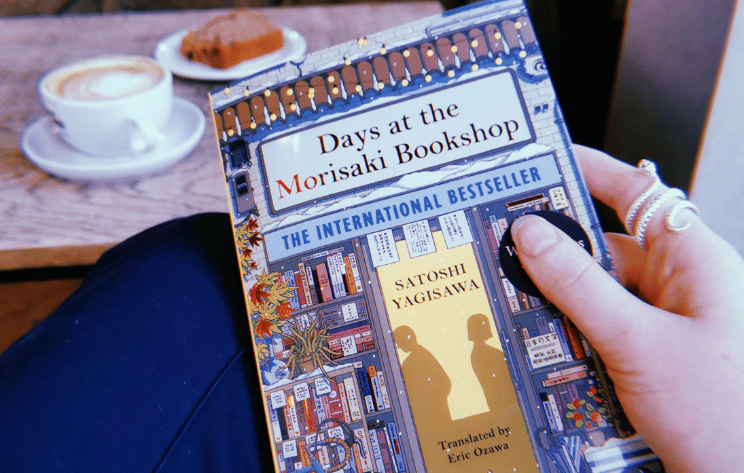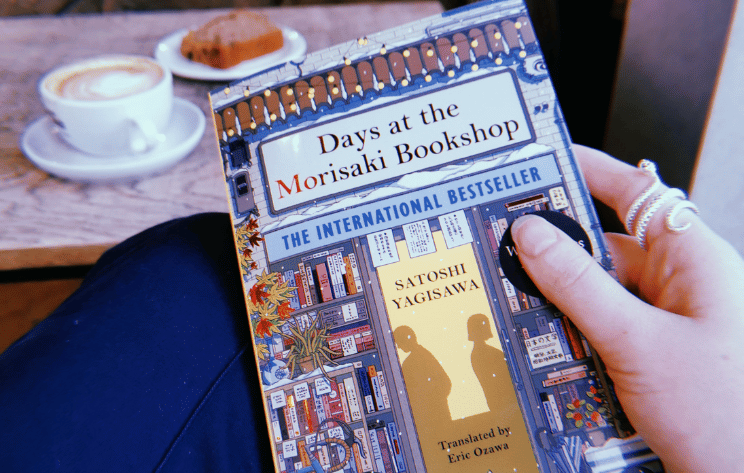

Days at the Morisaki Bookshop
MONTHLY BOOK REVIEW
Neha Taneja
3/11/20265 min read
Reading as Self Care
In a world that moves quickly and demands constant attention, reading remains one of the most reliable forms of self care for me.
A good book creates a pause. It gives the mind space to wander thoughtfully rather than react constantly. It allows us to step briefly into another life, another perspective, another rhythm of thinking.
Sometimes that pause is exactly what we need.
Days at the Morisaki Bookshop captures this beautifully. It reminds us that healing does not always arrive through grand transformations. Often it unfolds quietly through simple routines. Reading a few pages each day. Sitting in a peaceful space. Allowing stories to accompany us through uncertain moments.
Over time those small acts accumulate into something meaningful.
A reflection on the quiet, healing power of books
A few weeks ago, I had one of those rare moments that quietly stay with you for a long time. I was at the World Book Fair, not just as a visitor this time, but for an author signing and talk session for our book Bytes and Breaths (read more at www.bytesnbreaths.com).
For someone who has always loved books and bookshops, it felt strangely poetic to sit there as an author among readers. Conversations flowed about writing, leadership, mindfulness, and the ideas that had shaped the book. Yet what stayed with me just as much was the simple joy of being surrounded by books again.
If you have ever been to a large book fair, you will recognize the atmosphere immediately. Long aisles of publishers. Stalls overflowing with titles. Readers slowly browsing shelves with the kind of attention that only books can command. There is a certain quiet excitement in the air.
Between conversations and the signing session, I did what every book lover inevitably does in such a place. I wandered. Some books I picked up out of curiosity. Some because the cover design was irresistible. Some because the title lingered in my mind a little longer than the others. By the end of that afternoon I had a few carefully chosen books in my bag, each one carrying the promise of a future quiet reading moment.
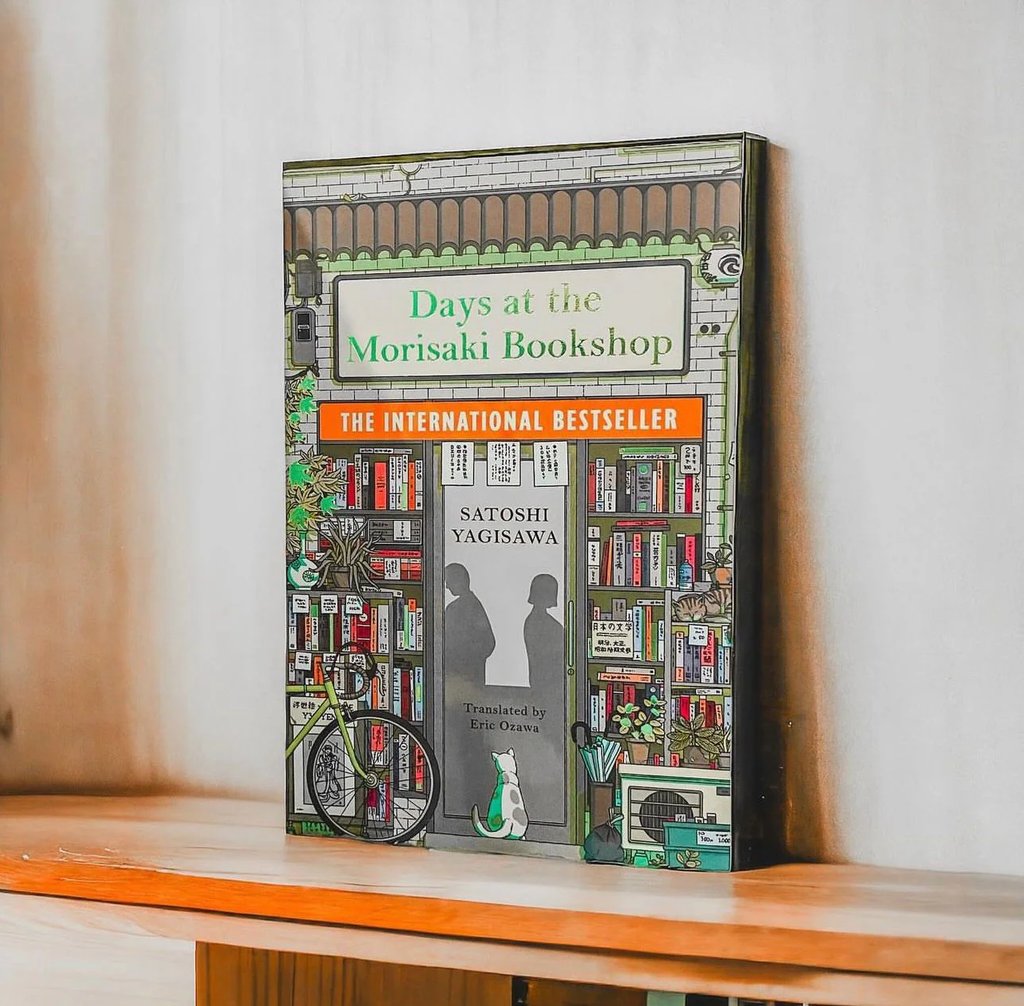
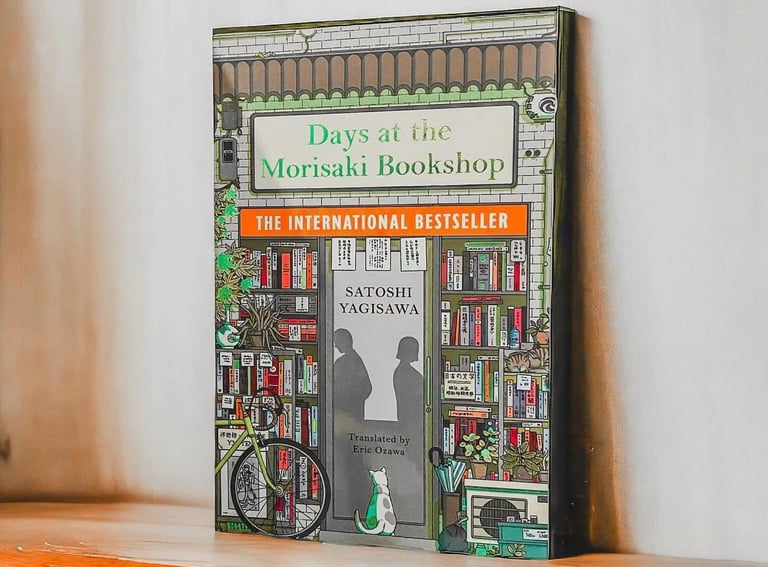
Among them was a slender novel titled Days at the Morisaki Bookshop by Japanese writer Satoshi Yagisawa. At the time it was simply one of many books purchased that day. I did not know then that it would turn into a deeply reflective reading experience.
A Quiet Morning With a Book
Some books demand urgency. Others ask for patience. Days at the Morisaki Bookshop belongs firmly to the second category.
I began reading it on a quiet morning when the day had not yet gathered its usual momentum. A cup of tea nearby, sunlight easing through the window, and the gentle invitation of a story that unfolds slowly rather than rushing forward.
The novel follows Takako, a young woman who finds herself emotionally adrift after a painful breakup. Her life feels suddenly directionless, and in that moment of uncertainty she moves into a small room above her uncle’s second hand bookstore in Tokyo’s Jimbocho district, a neighborhood famous for its bookshops.
The Morisaki Bookshop itself is not glamorous. It is slightly dusty, quietly eccentric, and filled with the accumulated presence of thousands of books. But over time, that modest space begins to transform Takako’s life.
What begins as an escape slowly becomes a refuge.
Through long hours among shelves, conversations with her uncle, and the gradual rediscovery of reading, Takako begins to rebuild a sense of self that had quietly fractured. There are no dramatic plot twists. No sweeping emotional confrontations.
Instead the book moves gently through small moments. The discovery of a forgotten novel. The quiet companionship of regular customers. The slow realization that books can open doors inside us that we did not know had closed.
And somehow, within that simplicity, the story becomes deeply moving.
Disclaimer:
The views expressed here are my own and should not be attributed to or considered representative of any organizations, employers, or institutions I am currently or have previously been associated with.
The Quiet Medicine of Stories
By the time I finished the book, I realized something that felt both simple and profound. Books do more than entertain or inform. They accompany us. They witness our interior lives. They help us reorganize our thoughts and emotions in ways that feel manageable again.
Perhaps that is why the memory of the World Book Fair stayed with me long after the event ended. Beyond the publishers, the author conversations, and the endless rows of titles, what truly filled that space was something far more powerful.
Thousands of stories waiting patiently for the readers who might need them.
And somewhere among those stories, as Days at the Morisaki Bookshop gently reminds us, the quiet work of healing continues.
Why Books Heal
Reading this novel reminded me of something fundamental about healing itself.
Healing, at its most basic level, is the restoration of coherence. It is the return to wholeness after something inside us has been disrupted.
When something breaks in our lives, whether it is a relationship, a dream, or our sense of direction, the internal patterns that once felt stable begin to fragment. Healing does not erase the break. Instead it reorganizes our inner world around it.
At the deepest level, healing often involves three intertwined processes.
The first is witnessing. A wound that remains unseen tends to remain isolated. When pain is acknowledged, either by another person or through our own reflection, it begins to reconnect with the rest of our inner life. The second is meaning making. Raw suffering without narrative feels chaotic. When we transform that suffering into a story, it becomes something we can understand and integrate. That is the moment when the scar stops being just a wound and becomes part of the story.
The third is re regulation.The body and mind must return to a sense of safety. Only then can the deeper processes of healing unfold.
Books, interestingly, perform all three functions at once.
A well written character reflects something back to us that we may not have been able to articulate ourselves. We read a sentence and suddenly feel a quiet recognition. Someone else has experienced this feeling too.
That moment dissolves the isolation that pain often carries.
Books also give structure to experience. They impose narrative form onto emotions that once felt scattered. A character’s grief, confusion, or transformation gives our own experiences a shape we can understand.
And then there is the act of reading itself. Deep reading slows the mind. Attention settles. The nervous system softens. For a while we inhabit someone else’s consciousness, which gently frees us from the intensity of our own thoughts.
In that sense every meaningful book is a small message from another mind that has lived through its own interior landscape and turned it into something shareable.
That alone can be profoundly comforting.
The Joy of Bookshops and Libraries
As I read Days at the Morisaki Bookshop, I was reminded of my own relationship with books and bookshops over the years.
Some of my earliest memories of curiosity were shaped in libraries and bookstores. Hours spent wandering between shelves. Discovering authors whose names meant nothing at first but slowly became companions. The quiet thrill of opening a book and realizing that it was exactly the story you needed in that moment.
Even today, one of my favorite rituals is browsing in a bookstore without a specific plan. Sometimes the best discoveries happen that way.
Equally special are the conversations that follow. Someone recommends a book that changed their thinking. Another reader shares a passage that stayed with them for years. Through these exchanges we begin to see how books travel quietly between lives, carrying ideas, questions, and perspectives across time.
Looking back, I often feel that those quiet hours among books also played a role in shaping my own writing journey. Reading widely exposes us to different voices, different ways of seeing the world. Over time those perspectives begin to form new connections in the mind.
Eventually some of those connections become ideas worth writing about.